



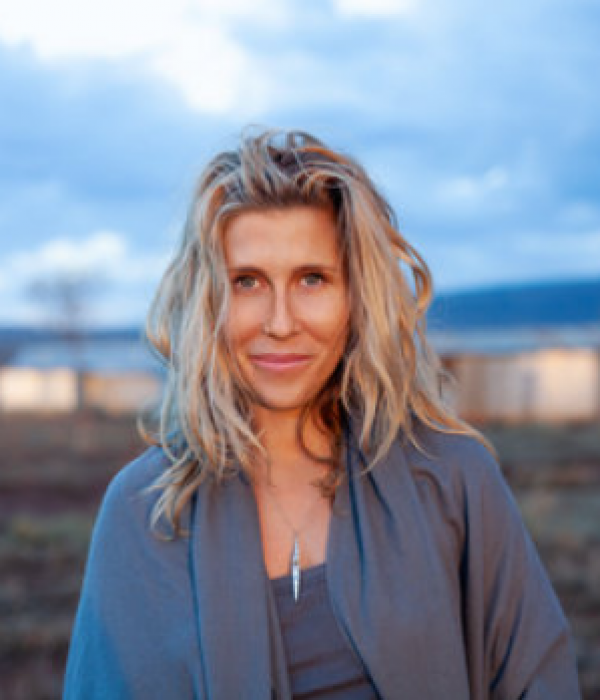

Dayle's Community Café

October Yoga in Sun Valley!

September 29, 2019

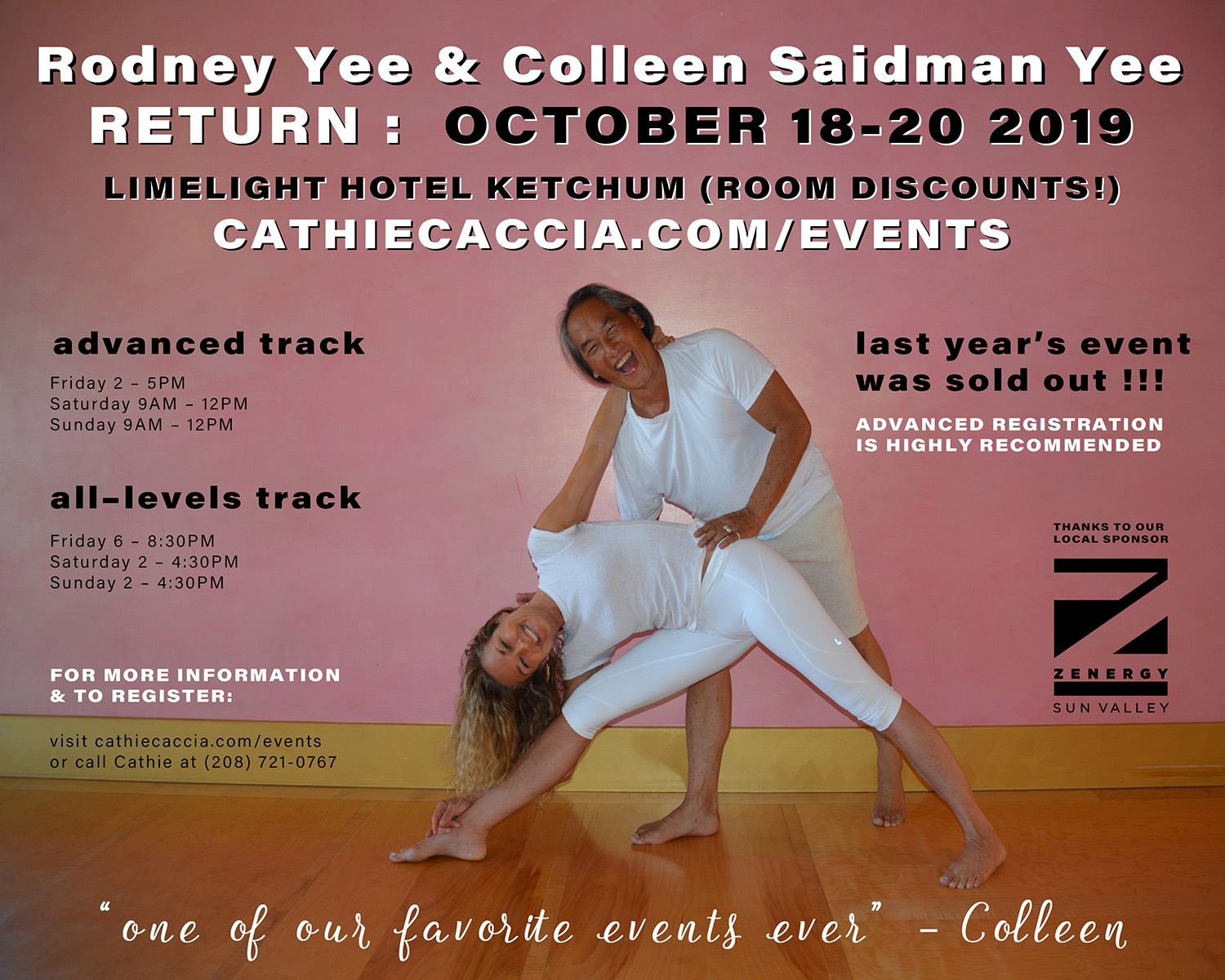
Cathie Caccia October Yoga Workshop
~
Last year’s workshop sold out; special rates available to stay at the Limelight, too.

https://www.limelighthotels.com/ketchum/the-hotel

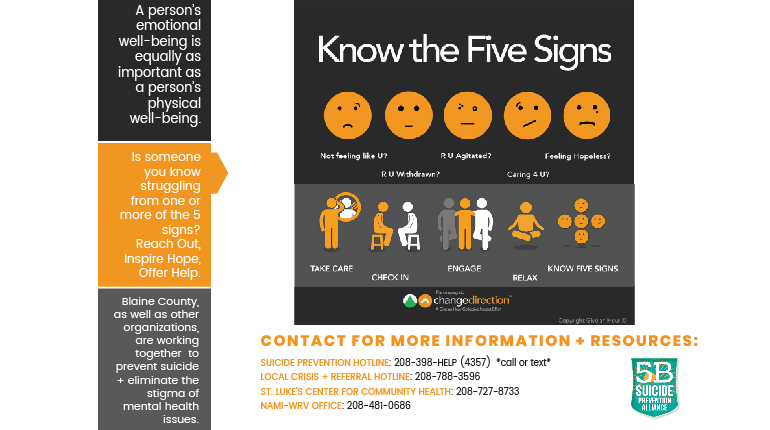
5B~5Signs


The 5B Suicide Prevention Alliance is offering “Know the Five Signs” presentations throughout the Wood River Valley to educate the community on recognizing the signs of emotional suffering and how to connect people to resources.

The 5B Suicide Prevention Alliance is comprised of Blaine County citizens and organizations working to prevent suicide and to build a culture of awareness, understanding, acceptance, and action around our community’s mental well-being.

These approximately 45-minute presentations are designed to build the community’s understanding of the many ways that suicide impacts our friends, families, clients, co-workers, and neighbors.

According to changedirection.org, we are at a crossroads when it comes to how our society addresses mental health:

“We know that one in five of our citizens has a diagnosable mental health condition, and that more Americans are expected to die this year by suicide than in car accidents. While many of us are comfortable acknowledging publicly our physical suffering, for which we almost always seek help, many more of us privately experience mental suffering, for which we almost never reach out.”

“The training was both meaningful and useful,” said Mary Williams, director of Healthy Living at the Wood River Community YMCA. “Having open dialogue about this issue helps us recognize and assist our colleagues and members who might be struggling with their mental health. I wholeheartedly recommend this training to other community businesses and nonprofits.”

eyeonsunvalley.com

For more information, visit https://nami-wrv.org/5balliance/. Or contact Erin Pfaeffle at 208-727-8734 or pfaeffle@slhs.org or Laurie Strand at 208-578-5443… lstrand@blaineschools.org.


Generation to Generation

Rilke.

I would rather sense you

as the earth senses you.

In my ripening 

ripens

what you are.


No miracles, please.

Just let your laws

become clearer

from generation to generation.

❧

Thomas Merton.

You train your eye, and your vision lusts after color. You train your ear, and you long for delightful sounds. You delight in doing good, and your natural kindest is blown out of shape. You delight in righteousness, and you become righteous beyond all reason. You overdo liturgy, and you turn into a ham actor. Overdo your love of music, and you play corn. Love of wisdom leads to wise contriving. Love of knowledge leads to faultfinding.

When the delights become a religion, how can you control them?

Chuang Tzu, who wrote in the fourth and third centuries B.C., is the chief authentic historical spokesman for Taoism.

Community Radio’s Town Square

September 27, 2019

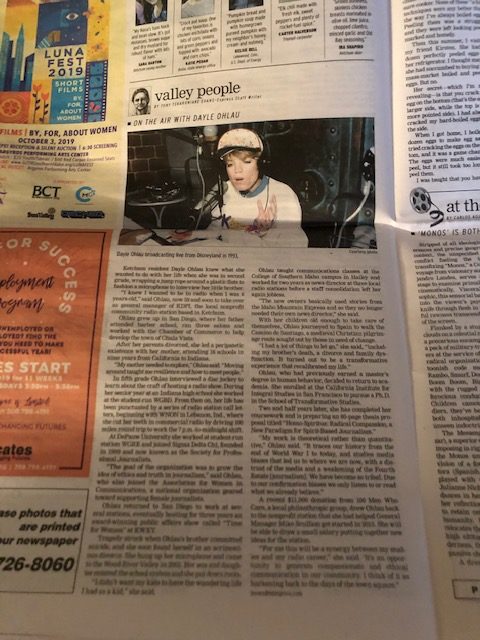
“I knew I wanted to be in radio when I was 6 years old,” said Dayle Ohlau, now 59 and soon to take over as general manager of KDPI, the local nonprofit community radio station based in Ketchum.

Ohlau, who had previously earned a master’s degree in human behavior, decided to return to academia. She enrolled at the California Institute for Integral Studies in San Francisco to pursue a Ph.D. in the School of Transformative Studies.

Two and half years later, she has completed her coursework and is preparing an 80-page thesis proposal titled “Homo-Spiritus: Radical Compassion, a New Paradigm for Spirit-Based Journalism.”

“My work is theoretical rather than quantitative,” Ohlau said. “It traces our history from the end of World War I to today, and studies media biases that led us to where we are now, with a distrust of the media and a weakening of the Fourth Estate [journalism]. We have become so tribal. Due to our confirmation biases we only listen to or read what we already believe.”

A recent $11,000 donation from 100 Men Who Care, a local philanthropic group, drew Ohlau back to the nonprofit station that she had helped General Manager Mike Scullion get started in 2013. She will be able to draw a small salary putting together new ideas for the station.

“For me this will be a synergy between my studies and my radio career,” she said. ‘It’s an opportunity to generate compassionate and ethical communication in our community. I think of it as harkening back to the days of the town square.”

https://www.mtexpress.com/wood_river_journal/valley_people/valley-people/article_10631b36-e07e-11e9-ba8a-0bcdeb96644b.html

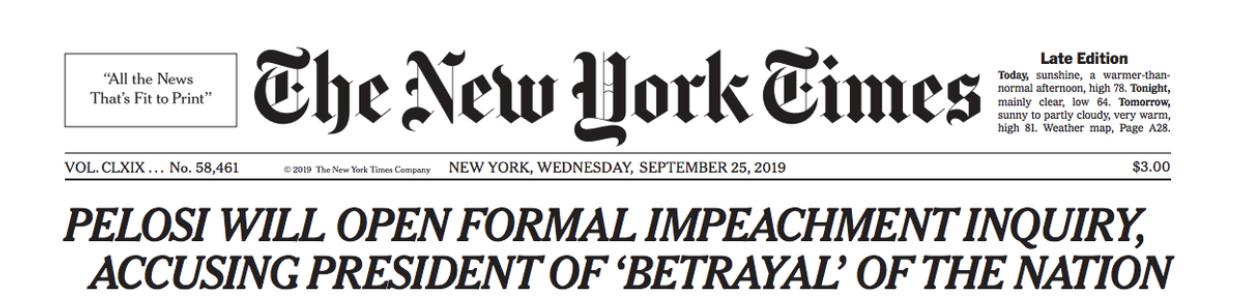
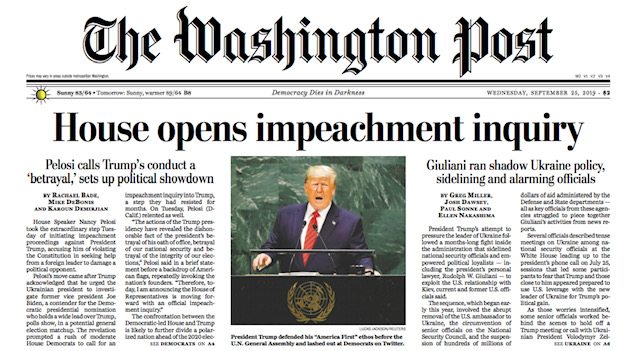
Free Press/Fourth Estate: Ukraine

[A college newspaper broke this story.]

The State Press:

Photo by Stella Atzenweiler | The State PressGraphic published on Thursday, Aug. 23, 2018.
By Andrew Howard | 

Executive Director of the McCain Institute Kurt Volker resigned from his position as the U.S. Special Envoy for Ukraine Friday, following reports he collaborated with Ukraine and President Donald Trump.

An ASU official confirmed Volker’s resignation Friday, and said the University could not speak about his future at ASU because the University does not comment on personnel matters.

Volker met with U.S. Secretary of State Mike Pompeo Friday to announce he would be resigning, the official said.

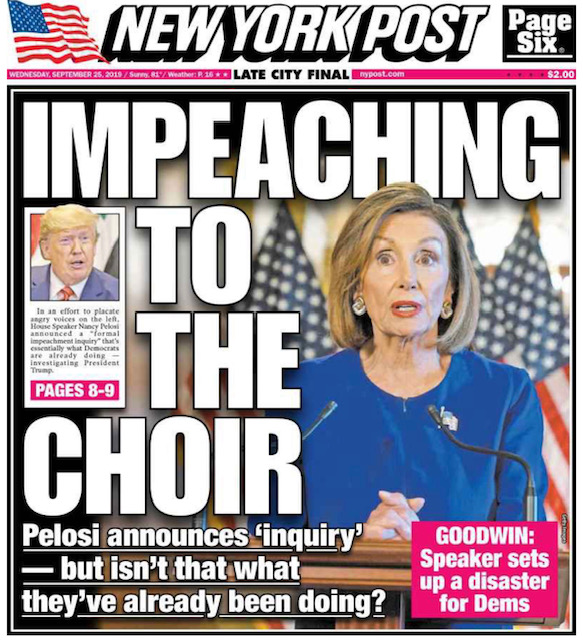
Volker’s name was mentioned in the recent whistleblower complaint, which has sparked an impeachment inquiry for Trump. Trump has defended his actions, including a phone call with Ukraine President Volodymyr Zelensky where Trump requested dirt on former Vice President Joe Biden.

The complaint details that Trump told his staff to cut aid to Ukraine unless they helped find information on presidential candidate Biden’s son, Hunter Biden.

According to the complaint, Volker helped organize meetings with Trump lawyer Rudy Giuliani and Ukrainian officials.

The complaint also alleges that Volker went to Kiev, the capital of Ukraine, to help guide Ukraine officials on how to handle Trumps’s demands.

Editor’s Note: This is a breaking story and will be updated as more information becomes available.


Reach the reporter at ajhowar6@asu.edu and follow @andrew_howard4 on Twitter.

Like The State Press on Facebook and follow @statepress on Twitter.


Megan Griswold: “The Book of Help: A Memoir in Remedies”

September 25, 2019

Community Library in Ketchum:

The Book of Help traces one woman’s life-long quest for love, connection and peace of mind. A heartbreakingly vulnerable and tragically funny memoir-in-remedies, Megan Griswold’s narrative spans four decades and six continents — from the glaciers of Patagonia and the psycho-tropics of Brazil, to academia, the Ivy league, & the study of Eastern medicine.

Join us for a reading and discussion around Megan’s story.

Books will be available for sale and signing, courtesy of Chapter One Bookstore.

Megan Griswold holds a Bachelor’s from Columbia University, a Masters in International Relations from Yale and a licentiate from the Institute of Taoist Education and Acupuncture. She has worked as a mountain instructor for the National Outdoor Leadership School, an NPR ‘All Things Considered’ commentator and a classical acupuncturist in private practice. She’s a trained doula, Zero Balancer, NIA instructor, NCCAOM acupuncturist, Wilderness First Responder, shiatsu practitioner, NASM personal trainer and has completed advanced yoga teacher trainings with Richard Freeman. She resides in a yurt in Wyoming.

Megan’s Yurt!

As a most personal and private ghostwriter, Megan helps others tackle life’s challenges through the written word. She helps you write the letter to break up with your boyfriend that final time or win him back forever.

She also assists individuals in navigating and selecting their own therapeutic and global adventures. She’s kissed a lot of therapeutic frogs (metaphorically only) so you don’t have to. Megan can help you edit your Choose Your Own Adventure in hopes you find the most efficient way to experience the world you want.

This Jackson, Wyoming, Yurt Brings a Dose of Whimsy to the Wilderness

https://www.architecturaldigest.com/story/jackson-wyoming-yurt-a-dose-of-whimsy-in-the-wilderness

Jackson Hole News & Guide

https://www.jhnewsandguide.com/valley/people/closeup/article_b747d246-7a0d-5320-a3c2-cdb14edd9d06.html


Interview with Dayle Ohlau as heard on KDPI 88.5 FM in Ketchum, Idaho

http://daylescommunitycafe.com/wp-content/uploads/2019/09/Megan-Griswold.mp3


Reminded today…


September 1, 1939

I sit in one of the dives
On Fifty-second Street
Uncertain and afraid
As the clever hopes expire
Of a low dishonest decade:
Waves of anger and fear
Circulate over the bright
And darkened lands of the earth,
Obsessing our private lives;
The unmentionable odour of death
Offends the September night.

Accurate scholarship can
Unearth the whole offence
From Luther until now
That has driven a culture mad,
Find what occurred at Linz,
What huge imago made
A psychopathic god:
I and the public know
What all schoolchildren learn,
Those to whom evil is done
Do evil in return.

Exiled Thucydides knew
All that a speech can say
About Democracy,
And what dictators do,
The elderly rubbish they talk
To an apathetic grave;
Analysed all in his book,
The enlightenment driven away,
The habit-forming pain,
Mismanagement and grief:
We must suffer them all again.

Into this neutral air
Where blind skyscrapers use
Their full height to proclaim
The strength of Collective Man,
Each language pours its vain
Competitive excuse:
But who can live for long
In an euphoric dream;
Out of the mirror they stare,
Imperialism’s face
And the international wrong.

Faces along the bar
Cling to their average day:
The lights must never go out,
The music must always play,
All the conventions conspire
To make this fort assume
The furniture of home;
Lest we should see where we are,
Lost in a haunted wood,
Children afraid of the night
Who have never been happy or good.

The windiest militant trash
Important Persons shout
Is not so crude as our wish:
What mad Nijinsky wrote
About Diaghilev
Is true of the normal heart;
For the error bred in the bone
Of each woman and each man
Craves what it cannot have,
Not universal love
But to be loved alone.

From the conservative dark
Into the ethical life
The dense commuters come,
Repeating their morning vow;
“I will be true to the wife,
I’ll concentrate more on my work,”
And helpless governors wake
To resume their compulsory game:
Who can release them now,
Who can reach the deaf,
Who can speak for the dumb?

All I have is a voice
To undo the folded lie,
The romantic lie in the brain
Of the sensual man-in-the-street
And the lie of Authority
Whose buildings grope the sky:
There is no such thing as the State
And no one exists alone;
Hunger allows no choice
To the citizen or the police;
We must love one another or die.

Defenceless under the night
Our world in stupor lies;
Yet, dotted everywhere,
Ironic points of light
Flash out wherever the Just
Exchange their messages:
May I, composed like them
Of Eros and of dust,
Beleaguered by the same
Negation and despair,
Show an affirming flame.

-W.H. Auden, 1907-1973

“September 1, 1939″ is a poem by W.H. Auden written on the occasion of the outbreak of World War II. It was first published in The New Republic issue of 18 October 1939, and was first published in book form in Auden’s collection Another Time”

Negativity Bias

News coverage of current affairs is predominantly negative.
American accounts of this tendency tend to focus on journalistic practices, but this cannot easily account for negative news content around the world. It is more likely that negativity in news is a product of a human tendency to be more attentive to negative news content. Just how widespread is this tendency? Our evidence suggest that, all around the world, the average human is more physiologically activated by negative than by positive news stories. Even so, there is a great deal of variation across individuals. The latter finding is of real significance for newsmakers: Especially in a diversified media environment, news producers should not underestimate the audience for positive news content.

(Thanks to Dr. Alfonso Montuori for sharing this article.)

Cross-national evidence of a negativity bias in psychophysiological reactions to news

Stuart Soroka, Patrick Fournier, and Lilach Nir
PNAS September 17, 2019 116 (38) 18888-18892; first published September 3, 2019
Edited by Susan T. Fiske, Princeton University, Princeton, NJ, and approved August 5, 2019 (received for review May 14, 2019)

Significance

News coverage of current affairs is predominantly negative. American accounts of this tendency tend to focus on journalistic practices, but this cannot easily account for negative news content around the world. It is more likely that negativity in news is a product of a human tendency to be more attentive to negative news content. Just how widespread is this tendency? Our evidence suggest that, all around the world, the average human is more physiologically activated by negative than by positive news stories. Even so, there is a great deal of variation across individuals. The latter finding is of real significance for newsmakers: Especially in a diversified media environment, news producers should not underestimate the audience for positive news content.

Abstract

What accounts for the prevalence of negative news content? One answer may lie in the tendency for humans to react more strongly to negative than positive information. “Negativity biases” in human cognition and behavior are well documented, but existing research is based on small Anglo-American samples and stimuli that are only tangentially related to our political world. This work accordingly reports results from a 17-country, 6-continent experimental study examining psychophysiological reactions to real video news content. Results offer the most comprehensive cross-national demonstration of negativity biases to date, but they also serve to highlight considerable individual-level variation in responsiveness to news content. Insofar as our results make clear the pervasiveness of negativity biases on average, they help account for the tendency for audience-seeking news around the world to be predominantly negative. Insofar as our results highlight individual-level variation, however, they highlight the potential for more positive content, and suggest that there may be reason to reconsider the conventional journalistic wisdom that “if it bleeds, it leads.”

  • news coverage
  • negativity bias
  • political communication

This paper is focused on the human propensity to give more weight to negative information than to positive information and the relevance of this tendency for the nature of news coverage. The importance of negativity biases for news is relatively clear. Negativity biases affect news selection, and thus also news production, as well as citizens’ attitudes about current affairs. Testing for the prevalence of negativity biases and considering their implications for the nature of news content is central to our understanding of the flow and impact of mass-mediated current-affairs content. In a period during which news around the world is especially wrought with negativity, this subject is of obvious significance.

The paper proceeds as follows. We first review the existing literature on negativity biases, particularly as it relates to news consumption, highlighting the paucity of comparative research on the issue. We note that one major consequence of this gap in research is an inability to distinguish the extent to which these negativity biases vary due not just to individual-level, but also to cultural, political, or media-system factors. The key, we argue, lies in testing for differences in responses to news content across both individuals and cultures. We then present results from what is, to our knowledge, the single largest, directly comparable body of data on negativity biases in psychophysiological responses to video news.

Results, based on over 1,000 respondents across 17 countries and 6 continents, suggest that there is, on average, a negativity bias in psychophysiological reactions to video news content. There are, however, also considerable differences in the way in which individuals react to negative versus positive news content. These individual-level differences are not easily explained by culture or country. Indeed, there is considerable within-country variation in responses to news content. This fact highlights the possibility that news content could be attention-grabbing for some citizens even if it is not systematically negative.

Background

Our research is motivated by 2 widely recognized features of modern-day communications. First, mass-mediated news is a central and critical component of large-scale representative democracy. Media provide a critical flow of information between elites and citizens and are a vital mechanism for democratic accountability. Second, negative tone is a defining feature of news; good news, in contrast, is nearly synonymous with the absence of news. This asymmetry in coverage has been the focus of a considerable body of work on mass media in the United States (1, 2), and it is evident in studies of media content and journalists’ decisions cross-nationally (3⇓–5). Importantly, this work suggests that, even as news coverage has been negative for many years, it has also been increasing in recent decades.

In sum, the nature and quality of mass-mediated news content is central to the nature and quality of representative democracy, and that content is systematically skewed toward negative information. This is partly a function of the demand for negative news, since market forces will produce news in line with consumers’ interests, including negativity (6). Even so, the tone of news content has been cited as a source of systematic deficiencies in what citizens know about their governments and the world around them (1). Inadequate or incorrect political knowledge, citizen apathy, and disengagement—these are just some of the consequences attributed to the overwhelmingly negative nature of news content.

These facts point to the importance of understanding why media content is the way it is. They also highlight the need to understand if and why media consumers prioritize negative coverage. Concerns about media coverage typically focus on the supply side of the media—i.e., choices of journalists and editors—but the demand side may be equally important. Even as people say they want more positive news, they systematically select more negative news (7), for instance. This should come as no surprise: There are, after all, burgeoning literatures across the social sciences identifying negative biases in human information processing and behavior (8⇓⇓⇓–12).

What explains the apparently widespread preference for negative information? One account is rooted in evolutionary theory. Attention to negativity may have been advantageous for survival. Negative information alerts to potential dangers (13); it has special value in terms of “diagnosticity” (14), or the “vigilance” (15) that is required to avoid negative outcomes. This account of the negativity bias is evident in literatures in physiology (16), neurology (17, 18), and, particularly, work on the importance of “orienting responses” in evolutionary biology (19). This account leads to the expectation of a negativity bias present across all human populations.

Another account is evident in work on cultural psychology and anthropology, as well as recent work on “media systems.” This research emphasizes the possibility that there are cross-cultural differences in negativity biases. There is, after all, work examining cross-cultural variation in related psychological phenomena, including self-assessments (20, 21), self-esteem (22), satisfaction (23), optimism (24), and reasoning (25). One frequent contrast in this work is between what seem to be more optimistic countries in the West (typically the United States) and less optimistic countries in the East (typically Japan). And, while cross-cultural explorations into negativity biases specifically are rare, several important exceptions find evidence of cross-national differences (23, 26, 27).

Systematic cross-national differences in responsiveness to news content might provide clues about how this negativity bias arises. What might drive this cross-cultural variance? The literature on cultural values points to some possibilities (28). Societies deal with anxiety about future uncertainties in different ways, and the extent to which members of a culture feel threatened by ambiguous or unknown situations may well affect the tendency to focus on negative information. A range of institutional factors may also matter. Societal tension between groups, and especially conflict that has crystallized in the polarization of political-party systems, may matter for negativity, at least where attentiveness to news coverage is concerned. Another dimension of variability is rooted in the institutionally coded professional practices of journalists (29). A strong professional requirement that journalists routinely cover politics in conflictual terms may also lead to viewers’ habitual expectation and attention to negativity.

Note that neither the evolutionary nor the cultural-institutional account depends on a conscious desire for negative information so much as an unconscious adaptation or learned tendency to prioritize negative information. Note also that the 2 accounts are not in competition—negativity biases are almost certainly conditioned by both. Consider work on the importance of “social learning,” alongside biology, as the basis of culture (30) and work in neurology and physiology on culture–gene coevolution (31, 32). We also do not want to discount the possibility that variation in negativity biases is not a primarily cross-cultural phenomenon, but an individual one. There already is work suggesting that negativity biases in reactions to video news vary across gender, for instance (33). And there is a growing literature focused on differences in negativity biases across political ideologies (34⇓–36).

Individual-level variables may be at the root of cross-cultural variation, insofar as individual-level factors vary across cultures. Individual-level variation may also be entirely independent of culture or work differently across cultures. Thus far, we simply do not know the extent to which heightened activation in response to negative news content is a culturally determined phenomenon. This not only limits our understanding of negativity biases generally, it limits our understanding of the demand and supply of negative news content.

Cross-National Physiological Responses to News

Our cross-national work responds to growing pleas for a more comparative approach to (political) psychology (37) and more comparative work in political communication as well (38). We also build upon a small, but growing, literature focused on cross-national experimentation in psychology and economics (39, 40).

Our analyses are based on laboratory experiments run in 17 countries: Brazil, Canada, Chile, China, Denmark, France, Ghana, India, Israel, Italy, Japan, New Zealand, Russia, Senegal, Sweden, the United Kingdom, and the United States. We also have 2 separate samples in Canada, Anglophone and Francophone, and 2 separate samples in Israel, Jewish and Palestinian. Our results are based on 1,156 respondents; to our knowledge, this is the largest and most broadly comparative psychophysiological study in the social sciences to date. (SI Appendix discusses sampling decisions in detail; SI Appendix, Fig. S1 shows the distribution of respondents by country and gender, and SI Appendix, Fig. S2shows the distribution of age by country.) The study protocol is straightforward: Respondents watched 7 randomly ordered BBC World News stories on a laptop computer while wearing noise-cancelling headphones and sensors on their fingers to capture skin conductance and blood volume pulse. (Videos were subtitled where necessary, and tests suggested that subtitles do not change the results presented here. See SI Appendix, Table A5.)

There already is a considerable body of work examining negativity biases in psychophysiology; there is a growing literature on psychophysiological reactions to political news content as well (33, 41, 42). Physiological measures have the advantage of capturing real-time, often subconscious, reactions to news content. We examined normalized skin-conductance levels (nSCLs), indicating physiological activation connected to, e.g., “orienting responses,” and the “fight or flight” response. We also relied on heart-rate variability (HRV)—specifically, the root mean square of the successive differences (RMSSD), capturing a combination of activation (increasing heart rate) and attentiveness (decreasing heart rate). (For more thorough accounts of both measures, see, e.g., refs. 43and 44.) Note that past work also views HRV as a measure of “emotional regulation” (45). The 2 perspectives are similar—each focuses on variation caused by the excitatory sympathetic nervous system and inhibitory parasympathetic nervous system, and each views higher HRV as an indicator of both activating and calming/focusing responses.

The tone of video content was the primary independent variable. Negativity was measured as an interval-level measure based on the average of second-by-second coding by expert coders (outlined in more detail in SI Appendix). Expert coders’ assessments were in line with assessments from study participants. (Average story ratings, by country, are shown in SI Appendix, Fig. S3.)

Analyses use data at several different levels of aggregation. Variation in heart rate was necessarily measured over longer intervals—in this case, over the course of entire news stories. Analysis of RMSSD values is thus at the respondent–story level. Skin conductance can be measured over very short time periods; here, we examined nSCL using a time-series panel dataset in which each respondent was a “panel” and nSCL was captured at 1-s intervals. The processing of physiological measures is discussed in SI Appendix.

The basic results for RMSSD, estimated across all participants in all countries, are illustrated in Fig. 1. Results are based on the regression model shown in SI Appendix, Table S2. (SI Appendix, Table S3 reproduces the same model, assigning weights to individuals so that all country-level samples are weighted equally; results are not substantively different.) The shift shown in Fig. 1, from an average story tone of −2 (positive) to +2 (negative), is equivalent to 10% of the observed SD in RMSSD. Participants thus exhibited higher variability in heart rate during negative news stories than they did during positive news stories. Given past work on HRV and media content (44), we interpret these results as reflecting higher attentiveness and arousal during these negative stories.

Fig. 1.

  • Download figure
  • Open in new tab
  • Download powerpoint

Fig. 1.

The estimated effect of news story tone on RMSSD, all countries combined.

Results for nSCL are illustrated in Fig. 2, based on second-by-second models shown in SI Appendix, Table S4. Note that these results are similar to those using the same respondent-stimulus-level data as was used for RMSSD; these models are included in SI Appendix, Table S2 (without country weights) and SI Appendix, Table S3 (with country weights). The second-by-second models of nSCL interacted negativity with time (in seconds, by story), given past work suggesting that the impact of negativity on skin conductance decreases over the course of a news story (42). Fig. 2 shows the estimated impact of negative (+2) content, versus neutral (0) and positive (−2) content, 20 s into a news story. The shift shown in Fig. 2 is equivalent to 65% of the observed SD in nSCL. The evidence supports the expectation that physiological arousal is greater for negative news coverage than for positive news coverage.

Fig. 2.

  • Download figure
  • Open in new tab
  • Download powerpoint

Fig. 2.

The estimated effect of by-second news story tone on nSCL, 20 s into news stories, all countries combined.

Note that while these findings are in line with past work, they are among the first to rely on such a large sample, focused on actual video news content, and not based exclusively on Anglo-American respondents. The fact that a negativity bias in physiological responses to video news is readily evident in cross-national data using stimuli with high external validity is of real significance. To be clear: This study directly demonstrates that humans around the world are more activated by negative news coverage. We are, perhaps, one step closer to accounting for the high frequency of negative news content around the world.

Recall, however, that our principal goal is to examine the possibility of systematic cross-national variation. Figs. 3 and 4 offer the critical diagnostic test. Fig. 3 shows the estimated effect on RMSSD of a 1-unit increase in negativity, based on models estimated separately for every participant, using the same specification as in SI Appendix, Table S2. The distribution of these estimated effects is shown, by country, where “estimated effects” are the coefficients for the negativity measure. The figure makes clear the high degree of variability underlying the overall result in Fig. 1. On balance, there are more participants to the right of the zero line—suggesting that respondents are more attentive to and activated by negative news stories. Overall, the mean coefficient is greater than zero. But there is a great deal of within-country variability as well. Indeed, Fig. 3 shows asterisks beside the countries for which the mean coefficient is significantly greater than zero (based on a 1-tailed t test); only Brazil, Canada, France, Italy, and Sweden showed systematically higher RMSSD during negative video content.

Fig. 3.

  • Download figure
  • Open in new tab
  • Download powerpoint

Fig. 3.

The estimated effect of news story tone on RMSSD, by country. Asterisks indicate the countries for which the mean coefficient is significantly greater than zero (based on a 1-tailed t test).

Fig. 4.

  • Download figure
  • Open in new tab
  • Download powerpoint

Fig. 4.

The estimated effect of by-second news story tone on nSCL, 20 s into news stories, by country. Asterisks indicate the countries for which the mean coefficient is significantly greater than zero (based on a 1-tailed t test).

The story is relatively similar for nSCL, in Fig. 4, which plots the estimated effect of a 1-unit increase in negativity on nSCL, based on second-by-second models estimated separately for each participant, using the same specification as in SI Appendix, Table S4. Again, results are shown by country, and asterisks are shown beside the countries for which the mean coefficient is significantly greater than zero (based on a 1-tailed t test). Results point to significant negativity biases in 9 of the 17 countries. In 2 countries, New Zealand and Sweden, the impact of negativity is, on average, opposite to our expectations, although not significantly so. (And note that while country-by-country results vary slightly across different model specifications and levels of data aggregation, in all cases, the basic story is the same: an overall average negativity bias, but with a good degree of individual-level difference; SI Appendix.)

Country accounts for very little of the variation in Figs. 3 and 4. ANOVAs suggest that country (included as a factor variable, with no additional controls) accounts for 1.5% of the observed variance in coefficients for RMSSD and 2.7% of the observed variance in coefficients for nSCL. Even if there were cultural, political, and/or media-system variables correlated with cross-national differences, then, it seems unlikely that they would explain much variance, and, indeed, we find no significant correlations between such measures and the coefficients used in Figs. 3 and 4 (SI Appendix, Table A6). This is not to say that there are no systematic individual-level differences—there clearly are significant differences in the ways in which individuals react to negative versus positive news content. Those differences simply do not appear to be strongly connected to country-level contextual factors.

Discussion

Our results suggest that negativity biases in reactions to news content are not a uniquely American phenomenon. Reactions to video news content reveal a mean tendency for humans to be more aroused by and attentive to negative news. That said, there also is considerable individual-level variation around that mean, and, in some instances, country-level samples would not on their own suggest statistically significant negativity biases in responsiveness to video news content.

Note that our results are focused entirely on reactions to news content—they do not run contrary to evidence of other systematic and important cross-cultural differences in psychology and information processing, nor do they counter the claim that deep-seated negativity biases in information processing are endemic. There is, of course, a good deal of work in psychology and neurology highlighting negativity biases in information processing generally (13, 16⇓⇓⇓⇓⇓–22, 46). Our goal has been to examine the degree to which these widely accepted psychological and neurological findings are evidenced in reactions to video news content. This is because we are interested in understanding why news content looks the way it does, and we allow for the possibility that reactions to news content are conditioned by a range of contextual and cultural factors beyond fundamental (physiological and neurological) negativity biases in information processing. That said, our results find little impact of country-level context in conditioning physiological responsiveness to video news.

There are, of course, a number of limitations to this study. We opted for nearly identical stimuli across countries, which has the advantage of comparability, but also means that we capture responses to news that may be different from what is typical in each country. A survey question asking about differences between our BBC and domestic news stories suggests small to moderate observed differences for all (non-U.K.) countries in our study (SI Appendix, Fig. S4). Even so, understanding the demand and supply of news may benefit from further country-specific analysis, targeting not just the tone, but also other varying aspects of news coverage.

We also do not want to discount entirely the possibility that context matters for negativity biases. The diagnosticity, or “outlyingness” (47), of negative content may well vary across contexts; those contexts may simply not correspond to the national–cultural samples we examine here. Indeed, even one’s own personal information environment, structured by factors such as income and employment, may affect negativity biases and news consumption. All we can say definitively here is that there is no link in our data between physiological reactions to valenced news content and national contexts—political, media, or otherwise.

That said, our results demonstrate a broadly cross-national negativity bias in responsiveness to video news content, while at the time demonstrating a very high degree of individual-level variation. This individual-level variation has important implications for how we understand news production. Most importantly, it suggests that audience-seeking news media need not necessarily be drawn to predominantly negative content. Even as the average tendency may be for viewers to be more attentive to and aroused by negative content, there would appear to be a good number of individuals with rather different or perhaps more mutable preferences. One lesson of our analyses is that work on media coverage and news production should not lose sight of these individual-level differences. For those focused on the substance and nature of news content, individual-level variability in negativity biases highlights the possibility for the audience-seeking success of news coverage that is less systematically negative.

Materials and Methods

There are 6 sections included in SI Appendix. SI Appendix, section A describes the experimental protocol. SI Appendix, section B includes the script used to introduce participants to the experiment. This study was reviewed and approved by the Comité d’Éthique de la Recherche des Arts et des Sciences at the Université de Montréal. Written informed consent was sought from and provided by all participants, using text included in SI Appendix, section C. SI Appendix, section D discusses both sampling and location in each country. SI Appendix, section E describes the processing of physiological data. SI Appendix, section F briefly reviews alternative estimation strategies. For the purposes of education and research, data and replication materials are available through the Harvard Dataverse (48).

Acknowledgments

We thank conference participants and colleagues for remarks, some of which were fundamental to the study; in particular, Vin Arceneaux, Chris Dawes, Johanna Dunaway, John Hibbing, Peter John Loewen, and Daniel Rubenson. We thank research coordinators and research assistants at our own and other institutions: Saja Abu-Fani, Maxim Alyukov, Jeremy Adrian, Thiago Barbosa, Alexandre Blanchet, Danin Chen, Yolanda Clatworthy, Lou d’Angelo, Danlin Chen, Veronica Dazzan, Fatou Diop, Thomas Donovan, Marie Fly, Nicole Gileadi, Amanda Hampton, Matthias Heilke, Emma Heffernan, John Jensenius, Gonoi Ken, Saga Khaghani, Robert Lee Vidigal, Ling Liu, Sofie Lovbjerg, Eleonora Marchetti, Radhika Mitra, Alex Nevitte, Hiroki Ogawa, Vijeta Pamnani, Shang Pan, Amma Panin, Shang Pan, Andres Parado, Heidi Payter, Martina Perversi, Felipe Torres Raposo, Tea Rosic, Autumn Szczepanski, Alassane Sow, Dominic Valentino, Omer Yair, and Kirill Zhirkov. We have relied on colleagues to help facilitate experiments abroad and owe special thanks to Michael Bang Petersen, Sharon Barnhardt, Pazit Ben-Nun Bloom, Fatou Binetou Dial, Ray Duch, Vladimir Gelman, Peiran Jiao, Masaru Kohno, Neils Markwat, Johan Martinsson, Gianpietro Mazzoleni, Elin Naurin, Nicholas Sauger, Sergio Splendore, Nurit Tal-Or, Yariv Tsfati, Mathieu Turgeon, and Jack Vowles. Experiments were run by using purpose-built software by Bennett Smith, first designed for work with Stephen McAdams and Elisabeth Gidengil; and preliminary work depended on laboratory space and funding from the Center for the Study of Democratic Citizenship and from the Hebrew University Halbert Center. This work was supported by the Social Science and Humanities Council of Canada.

Copyright © 2019 the Author(s). Published by PNAS.

This open access article is distributed under Creative Commons Attribution-NonCommercial-NoDerivatives License 4.0 (CC BY-NC-ND).
Copyright © 2019 National Academy of Sciences. Online ISSN 1091-6490

https://www.pnas.org/content/116/38/18888?fbclid=IwAR0waO9_xj8Cy2Urwvb6uz1mze63Ko-SHypN8_tIYEpH_pkiqldd3qeJA2g#sec-1

History.


A lesson from 45 years ago…
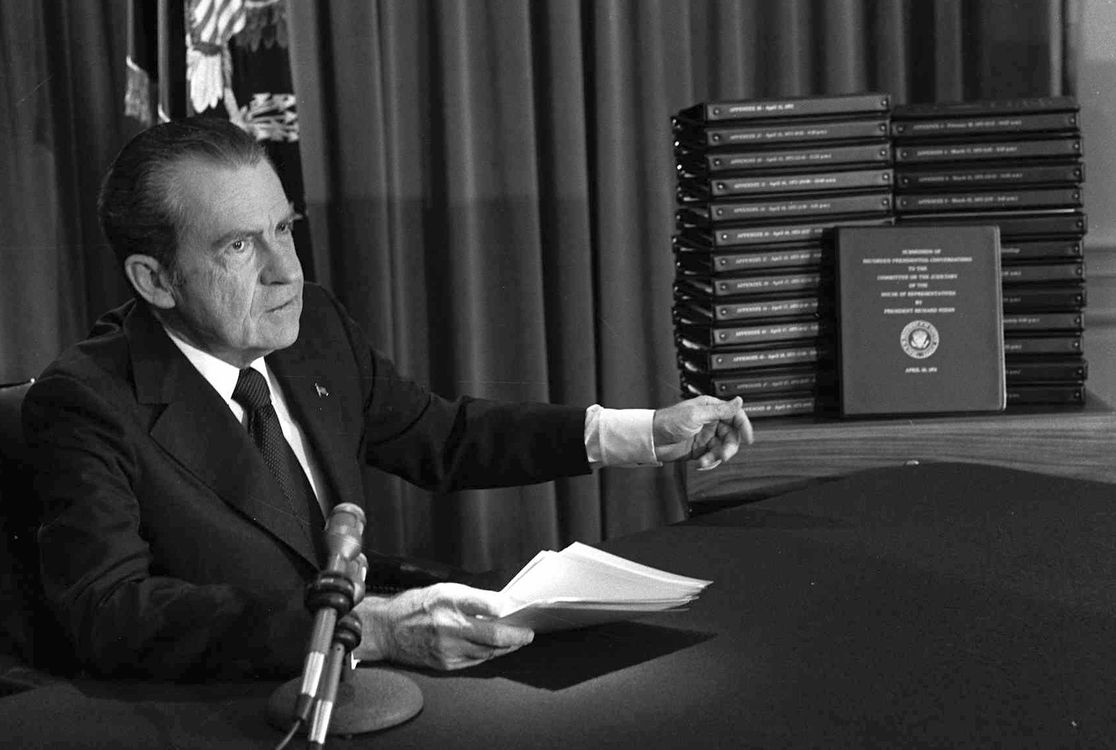
On April 29, 1974, President Richard M. Nixon points to the transcripts of the White House tapes after he announced during a nationally-televised speech that he would turn over the transcripts to House impeachment investigators. Photo: AP

“As a junior aide in President Richard Nixon’s White House, I saw congressional oversight and investigation command immensely greater power and respect than it does today,” Jonathan C. Rose — special assistant to Nixon from 1971 to 1973, and associate deputy attorney general from 1973 to 1975 — writes in The Atlantic.

“As evidence implicating the White House mounted, the administration displayed no inclination toward negotiation or accommodation with the Senate Watergate Committee. On March 15, 1973, Nixon issued an edict asserting executive privilege, declaring that White House aides and papers were entirely off limits to the committee. If the committee desired to press the issue, the president said, it could pursue a contempt prosecution through the courts.
“Pressed for his reaction, [Senate Watergate Committee Chairman Sam] Ervin said Nixon’s position was ‘executive poppycock, akin to the divine right of kings.’ Ervin declared that his committee had no intention of submitting to the suggested judicial delays, but would instead utilize the Senate’s sergeant at arms to arrest any recalcitrant White House aide, bring him to the bar of the Senate for trial, and ultimately compel him to testify.
“As damaging revelations continued to mount and the stigma of cover-up gathered strength, the White House floated trial balloons, offering the Watergate Committee possible closed-door interviews with White House aides. …
“By mid-April 1973, Nixon’s resistance to testimony by White House aides had collapsed, and a number of them testified. This testimony disclosed the White House taping system and confirmed the existence of  tapes. Those disclosures ultimately led to Nixon’s departure from office.”
-AXIOS


#NationalVoterRegistrationDay

September 24, 2019

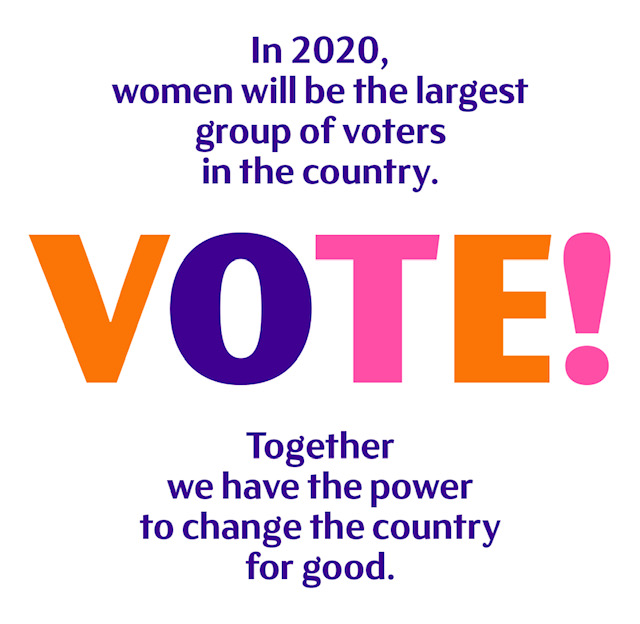
Make sure you’re registered to vote. Then, ask 5 friends to register. It’s the most important thing we can for our country.

https://www.vote.org

https://supermajority.com

A vision of global healing.

September 22, 2019

And a new paradigm for center-based spirituality for all of our guiding institutions.

Imagine, for a moment, living in a world born from spirituality. Visionary Matthew Fox embraces a concept of a creation-centered spirituality, in which all that exist are a blessing and bring ancient wisdom to solve current issues.

Fox embraces a sacred relationship between humanity and the Earth.

“Fox’s prophetic vision of good for all people everywhere, combined with an experience of mystical unity, became the hallmark of his work.” [Science of Mind/October]. He embraces the ancient wisdom of Creation Spirituality, adapted to present-day concerns.

Creation Spirituality affirms a common ground among all the world’s faith traditions. Juline explains: “It is a theology that respects the sacredness of nature and the holy relationship humanity has with it. Centuries-old mysticism melds with current concerns about damage to the environment, social injustice, and all forms of destruction and exploitation.”

Radical compassion [mine], ‘where the harvest is compassion, unity, love, inclusion, creativity and good for everyone.’

-Kathy Juline is an author and former editor of “Science of Mind” magazine.

Fr. Richard Rohr: “When we carry our small suffering in solidarity with humanity’s one universal longing for deep union, it helps keep us from self-pity or self-preoccupation. We know that we are all in this together. It is just as hard for everybody else, and our healing is bound up in each other’s. Almost all people are carrying a great and secret hurt, even when they don’t know it. This realization softens the space around our overly defended hearts. It makes it hard to be cruel to anyone. It somehow makes us one—in a way that easy comfort and entertainment never can. Some mystics go so far as to say that individual suffering doesn’t exist at all and that there is only one suffering. It is all the same…”


Be the change.

We have more power than we know. We must collectively harness our power for change.

A X I O S

Walmart, which first banned assault weapon sales and now vaping products, is providing a template of how CEOs can move beyond a monomaniacal focus on profits, Axios CEO Jim VandeHei writes.

  • Why it matters: It’s one thing to sign an unenforceable pledge to think more about employees and society, like most members of the Business Roundtable did. It’s another to take specific action while politicians dither.

In conversations with a half-dozen CEOs this week, we were stunned by how much pressure business leaders are feeling to take social action. If so, here’s what they can do:

  • JPMorgan Chase, Starbucks, Walmart, Amazon and many others increased their minimum wage to $15. Every CEO has the power to do this.
  • Delta Airlines returns billions in profits to employees — this year, a bonus equal to 14% of their annual pay — and has grown since making this change. Every company can do this.
  • Amazon this week became the first to sign The Climate Pledge to be net-zero carbon across its businesses by 2040 — a decade ahead of the Paris Agreement’s goal of 2050. An individual company can’t put a dent in overall pollution — but a bunch might.
  • Stripe, the online payments platform, announced last month that it plans to spend at least $1 million a year to pay for direct removal of carbon dioxide from the atmosphere. Stripe said in its emissions announcement: “For other companies: Please reach out to Stripe to join our commitment.”
  • Bank of America last year stopped lending money to makers of military-style assault weapons.
  • Dick’s Sporting Goods paid a price in its earnings after it initially made it harder to buy firearms in its store, but then went even further this year.

What else can be done:

  • They could also limit CEO pay if they wanted to narrow the gap in their own shop.
  • All retailers control what’s on their shelves, so if they want to eliminate AR-15s, or vaping, or whatever — free enterprise permits it.
  • All companies control child care, family leave and health policies and can be as generous as they choose.

The big picture: The new public assertiveness by corporations follows an earlier wave, after President Trump took office, of CEOs taking stands on immigration, climate, gender equality and other issues that their predecessors avoided.

  • Apple’s Tim Cook, who has become increasingly vocal, said at a Fortune conference last year: “Apple is about changing the world. It became clear to me some number of years ago that you don’t do that by staying quiet on things that matter.”

The bottom line: The pressure on CEOs from employees, customers and communities seems to only be intensifying.

  • Go deeper: “CEOs are America’s new politicians” … “CEOs under more pressure to save society” … “A new form of American capitalism.”


Community.

September 21, 2019

It is not more bigness that should be our goal. It must be to bring people back to … the warmth of community, to the worth of individual effort and responsibility … and of individuals working together as a community to better their lives and their children’s future. -Robert F. Kennedy

Each of us must rededicate ourselves to serving the common good. We are a community. Our individual fates are linked; our futures intertwined. And if we act in that knowledge and in that spirit together, as the Bible says, ‘We can move mountains.’ -Jimmy Carter


International Day of Peace #2020

Marianne: “A US president in the 21st century should have as much understanding of the internal dynamics that cause people to change, as of the external dynamics that cause policy to change. We must treat more than symptoms; we must also treat cause. Otherwise symptoms simply morph into new ones.”

Chadwick Moore, journalist and Constitutional conservative: “I gave a speech last night to about 300 Republicans. I started off cracking mean jokes about each of the Democrat contenders. When I got to Marianne Williamson (who I praised), she got a round of applause. I was not expecting that.”

This Saturday, 9/21, millions of people across the globe will be celebrating the UN’s International #PeaceDay. Let’s create a world in which every day is that. Join me for a deep dive. #MeditateForPeace.

I want to talk to you about waging peace.

From millions of chronically traumatized children to mass incarceration to family separation at the border, the United States has no more serious problem than the problem of violence itself.

And yet, even as the current administration starves the international peace-building capacities of the State Department, we have no federal platform from which to seriously wage peace domestically.

We need both.

Through support of my candidacy for president of the United States, you can help alter the course of our nation and model peace for our world.

When I become president, I will establish a U.S. Department of Peace.

‍This campaign to establish a U.S. Department of Peace is the first step in dismantling our systemically entrenched perpetuation of violence. And it is critical.

Our current administration actively cuts peace-building programs that are statistically proven to increase the incidence of peace and reduce conflict, despite their efficacy. These programs represent expanded economic opportunities for women, expanded educational opportunities for children, reduction of violence against women, and the amelioration of unnecessary human suffering wherever possible.

We should see large groups of desperate people as a national security risk. In doing right by our fellow human beings, we will pave the way to a better world.

I believe Americans are ready to do the right thing.

This is why I will make peace-creation a signature of my presidency. Sign today if you agree that there should be a US Department of Peace.

Our country’s priorities are clearly reflected in our budget. The Defense Department has a military budget of $718 billion – almost larger than that of all other nations combined – while our State Department budget – including all peace-creation agencies – is $40 billion. The independent U.S. Institute of Peace has a budget of only $36.8 million.

As president, I will make the relationship between the State Department and the Department of Defense a robust partnership. And I will build up the peace-building agencies within the State Department in a major way.

Domestically, we need to similarly disrupt patterns of violence. Join me in support for building a U.S. Department of Peace to address issues of peace-building here at home – trauma-informed education, community wrap-around services, restorative justice, conflict resolution, mindfulness in the schools, violence prevention programs, and more.

When I am president, the world will know that America’s greatest ally is humanity itself. Let us restore our position as a moral leader both here and abroad. Far more Americans love than hate, but we must display our love with a renewed commitment and serious conviction. Together, we can and we will. -Marianne

http://Marianne2020.com/events

“Americans will always do the right thing, only after they have tried everything else.”

-Winston Churchill

The Correspondent

September 19, 2019

‘After nine months of intensive preparation, over 2,000 job applications and dozens of interviews, we’re thrilled to introduce The Correspondent’s first five full-time correspondents.

Starting on 30 September, you’ll be able to follow them on our English-language platform, where they’ll join forces with our 50,000 members to investigate some of the major themes of our time.

While The Correspondent is a relatively small start-up, we’ve done our absolute best to put together a diverse team — both in terms of the topics our correspondents will be covering and the locations they’ll be reporting from.

After launching, we’ll introduce you to some of our freelance correspondents, who will be helping us to cover an even greater variety of topics and perspectives. We’ll also be translating internationally relevant pieces by a number of our Dutch correspondents into English in order to share their work — and their unique insights — with the rest of the world.’

At 28, OluTimehin Adegbeye (1991) may be the youngest member of our team of correspondents, but her CV speaks for itself.

Timehin’s work on political power structures, gender, and social inequality has been published in multiple languages around the world. She has written for a variety of publications including This Is Africa, Africa is a Country, and BellaNaija, and her 2017 TED Talk on the future of urban development has garnered well over two million views (and counting) — it’s no wonder her Wikipedia bio describes her as “a prominent figure among Nigerian and African feminists of her generation”.

As our correspondent covering the topic of Othering, she’ll investigate the myriad ways in which people are forced into the role of “the other” — in the media, in politics, and in everyday life. Her mission: to understand what divides us, in order to discover what unites us.

Read OluTimehin Adegbeye in her own words: “We must tell more complex and inclusive stories about human experience”


Eric Holthaus (Minnesota, United States)

If you’ve spent any time at all on Twitter, there’s a good chance you’ve encountered science journalist Eric Holthaus (1981) at some point. With nearly half a million followers, he’s one of the most influential voices in the debate surrounding one of the great challenges of our time: climate change.

A trained meteorologist, Eric combines an impressive grasp of climate science with an insatiable desire to find solutions to this problem. His work has previously appeared in The Washington Post, Rolling Stone, Slate and Grist, to name just a few.

As our Climate correspondent, Eric not only aims to shed light on the causes and consequences of climate change, but he also wants to enlist your help in answering the question: what needs to change between now and 2030 in order to avert a global climate crisis?

Read Eric Holthaus in his own words: “For too long, our conversations about the climate have been filled with despair”


Irene Caselli (Trento, Italy)

During our very first Skype meeting, Italian journalist Irene Caselli(1981) shared with us a startling insight: when it comes to who you are, who you’ll become, and the world you’ll grow up in, virtually nothing will have as great an impact as the first 1,000 days of your life.

After spending over a decade in Ecuador, Venezuela and Argentina reporting for major news outlets like the BBC, Deutsche Welle and The Washington Post, Irene will be joining our dream team here at The Correspondent.

On her beat, The First 1,000 Days, she’ll examine how our earliest years — a period that everyone experiences but no one remembers — have the power to shape not only the people we become, but also the societies we live in. From the influence of parental leave on economic inequality to the latest in brain development research to the long-term consequences of stress, Irene will explore issues that affect everyone, not just those of us with children.

Read Irene Caselli in her own words: “The first 1,000 days of human life are both essential and underreported”

Tanmoy Goswami (New Delhi, India)

During a week-long introductory session at our headquarters in Amsterdam, we asked all five of our correspondents to bring along an object with sentimental value. When it was his turn, Indian journalist Tanmoy Goswami (1983) opened his bag and drew out a small medical booklet about his dealing with depression.

This experience has proven to be an invaluable source of inspiration for his work as a journalist. Tanmoy, a self-described “mental-health nerd”, specializes in reporting on the science and economics of mental healthcare around the world.

His career path has taken him from Fortune India and Times Internetto his new home here at The Correspondent. In his role as our Sanitycorrespondent, he’ll continue his transnational quest to explore the many facets of modern mental health.

Read Tanmoy Goswami in his own words: “I hope to make mental illness less intimidating”

Nesrine Malik (London, United Kingdom)

As you might guess from the title of her new book, We Need New Stories, Nesrine Malik (1977) is a journalist on a mission: to seek out new ideas for a better world.

Born in Sudan, based in London, and frequently spotted in Cairo, Nesrine has been shaped by a variety of cultures, and she’s eager to find out what we can learn from them. Nesrine made a name for herself as a writer and columnist for The Guardian (you can read her column here) and was awarded the 2019 Orwell Prize for her work on identity politics.

As our Better Politics correspondent, she’ll embody one of The Correspondent’s core principles: we don’t just cover the problem, but also what can be done about it. So get ready to join Nesrine on her mission — we can’t wait to see what kinds of ideas our members come up with!

Read Nesrine Malik in her own words: “Objectivity preserves the status quo. With better journalism we can have better politics”

#

More correspondents to come!


We hope you’ve enjoyed this sneak preview of our first five correspondents.

If you’d like to follow them on our platform starting on 30 September, join The Correspondent today. 

We’ll also be introducing a number of freelance correspondents and announcing which of our Dutch pieces will be made available in English soon, so stay tuned!

Let the countdown to 30 September begin!

Rob Wijnberg
Founding Editor

Day of Peace

This Saturday, September 21st, is the International Day of Peace.

‘As the candidate for president described as a “peacemonger,” I want to make sure we participate in a worldwide embrace of the idea that peace is possible and war is not inevitable.

Please join me this Saturday live in Fairfield, Iowa, or via livestream, as we speak of, reflect on, and meditate for peace. The power of the United States of America is an awesome responsibility for all its citizens, and nowhere more so than in the area of war and peace.

Let’s join together and make it so. Please join us for the livestream on Saturday and spread the word to all your friends.

With love,
Marianne’

https://www.marianne2020.com/issues/us-department-of-peace-plan?emci=54c47e71-69da-e911-b5e9-2818784d6d68&emdi=100cb698-e0da-e911-b5e9-2818784d6d68&ceid=298046


https://medium.com/@cksanders/marianne-williamson-the-new-gladiator-319df71e1416

Marianne Williamson Is The New Gladiator

To me, being a Democrat means standing up for justice, fairness, tolerance, and truth. It means being compassionate and empathetic to our fellow citizens. It means fighting for our voting, religious and human rights. It means protecting freedom of speech and striving for equality among the races and sexes. It means following the Constitution and honoring our American ideals and principles. It does not mean tearing someone apart for their spiritual beliefs and political ideas just because they don’t jive with mine or ignoring their voice because they don’t hit an arbitrary number on an artificial poll sample. Everyone has a voice and deserves to be heard.

The 2020 Election is perhaps the most important vote we will ever make in our lifetime. We must reject hate, racism, bigotry and corruption and vote in responsibility, transparency and unity before we do more damage to each other and the planet. Unfortunately, many in the Democratic Party have viciously turned on their own.

-CK Sanders


Her Humanity

Amy Walter, host of Politics w/Amy Walter on The Takeaway:

‘Dear young aspiring journalists, the reason for the outpouring of sadness and love for Cokie Roberts isn’t just b/c she was smart and really good at what she did. Her

humanity

set her apart. She didn’t sacrifice it for her job.’

The Fifth Congress had recessed in July 1798 without declaring war against France, but in the last days before adjourning it did approve other measures championed by Abigail Adams that aided in the undoing of her husband—the Alien and Sedition Acts. Worried about French agents in their midst, the lawmakers passed punitive measures changing the rules for naturalized citizenship and making it legal for the U.S. to round up and detain as “alien enemies” any men over the age of fourteen from an enemy nation after a declaration of war. Abigail heartily approved. But it was the Sedition Act that she especially cheered. It imposed fines and imprisonment for any person who “shall write, print, utter, or publish…any false, scandalous and malicious writing or writings against the government of the United States, or either house of the Congress of the United States, or the President of the United States” with the intent to defame them. Finally! The hated press would be punished. To Abigail’s way of thinking, the law was long overdue. (Of course she was ready to use the press when it served her purposes, regularly sending information to relatives and asking them to get it published in friendly gazettes.) Back in April she had predicted to her sister Mary that the journalists “will provoke measures that will silence them e’er long.” Abigail kept up her drumbeat against newspapers in letter after letter, grumbling, “Nothing will have an effect until Congress pass a Sedition Bill, which I presume they will do before they rise.” Congress could not act fast enough for the First Lady: “I wish the laws of our country were competent to punish the stirrer up of sedition, the writer and printer of base and unfounded calumny.” She accused Congress of “dilly dallying” about the Alien Acts as well. If she had had her way, every newspaperman who criticized her husband would be thrown in jail, so when the Alien and Sedition Acts were passed and signed, Abigail still wasn’t satisfied. Grumping that they “were shaved and pared to almost nothing,” she told John Quincy that “weak as they are” they were still better than nothing. They would prove to be a great deal worse than nothing for John Adams’s political future, but the damage was done. Congress went home. So did Abigail and John Adams.”
― Cokie Roberts, Ladies of Liberty


Again.

September 4, 2019

One day you finally knew
what you had to do, and began,
though the voices around you
kept shouting
their bad advice—
though the whole house
began to tremble
and you felt the old tug
at your ankles.
“Mend my life!”
each voice cried.
But you didn’t stop.
You knew what you had to do,
though the wind pried
with its stiff fingers
at the very foundations,
though their melancholy
was terrible.
It was already late
enough, and a wild night,
and the road full of fallen
branches and stones.
But little by little,
as you left their voices behind,
the stars began to burn
through the sheets of clouds,
and there was a new voice
which you slowly
recognized as your own,
that kept you company
as you strode deeper and deeper
into the world,
determined to do
the only thing you could do—
determined to save
the only life you could save.

-Mary Oliver, The Jouney


Dayle’s Community Cafe is on hiatus until September 18th.

Blessings.

Jai.

❥

  • Today’s Café
  • Café News
  • Café Contact
  • Keep in touch

    Bluesky

    Keep Reading, Keep Speaking Freedom Forum

  • Recent Posts

    • Dayle in Limoux – Day #85
    • Dayle in Limoux – Day #84
    • Dayle in Limoux – Day #83
    • Dayle in Limoux – Day #82
    • Dayle in Limoux – Day #81
  • Tags

    2020 Center for Action & Contemplation community Compassion COVID COVID-19 dayle in limoux Democracy Gaia Hope Idaho journalism kindness Love Marianne Williamson Mark Nepo On Being Power Path Richard Rohr Rilke Seth Godin spirit Thomas Merton Truth Vote
  • Archive

    September 2019
    S M T W T F S
    1234567
    891011121314
    15161718192021
    22232425262728
    2930  
    « Aug   Oct »
Clean Web Design
  • Dayle Ohlau

    208.309.1219

    dayle.cafe@icloud.com